Unplugged Ceremonies: How to Ask Guests to Put Their Phones Away
Ask any wedding photographer in Ireland for their least favourite photograph and they'll describe the same one: the bride coming down the aisle, and on either side a row of guests holding phones in front of their faces. Her father is looking at a screen. Her mother is in the next row, hidden behind an uncle's iPad. The photographer's shot of the groom's reaction has an arm in it.
An unplugged ceremony is the fix: you ask guests to put phones and cameras away for the ceremony, and only the ceremony. It's a small request. The trick is in how you ask.
What it is, and isn't
Unplugged means no phones, cameras or tablets from the moment the processional starts until the moment you walk back up the aisle as a married couple. Twenty to forty minutes. It doesn't mean the whole day. Guests can photograph the confetti, the drinks reception, the speeches and the dance floor to their hearts' content, and you'll be glad they did.
Some couples extend it to the speeches, for the same reasons. That's a reasonable ask too, but the ceremony is where it matters most.
Why it's worth asking
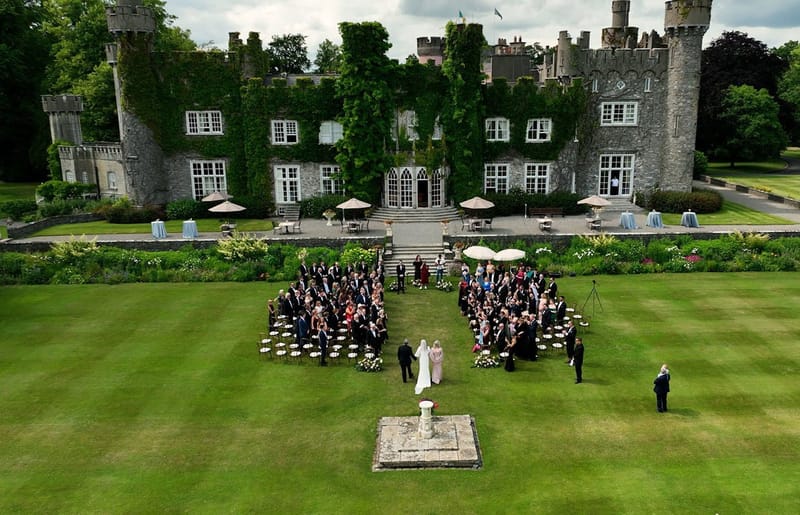
- The aisle. The walk in is the one shot every photographer and videographer plans around, and it's the one that phones ruin most. Guests lean into the aisle to film it, and the clear view the professionals arranged is gone.
- The reactions. Your families' faces during the vows are some of the best frames of the day. A phone in front of a face is a phone in front of a face.
- Flash. A guest's flash during the vows, in a dim church, puts a white blast across the videographer's shot and the photographer's exposure.
- Presence. This one is for you. A church full of people watching you, rather than watching you through a screen, feels different, and it shows in the film.
- The professionals you paid for. You've hired people whose job is this exact 30 minutes. Let them do it. Our guides to choosing a photographer and recording the vows cover what they're doing while the guests sit back.
How to ask, and where
The request lands best when guests hear it three times, briefly, and from different directions:
1. Before the day. A line on the invitation or your wedding website. Keep it to one sentence and keep it warm:
We'd love you to be fully with us for the ceremony, so we're asking everyone to keep phones and cameras away until we've said "I do". Our photographer will catch it all, and we'll share the photos.
2. At the door. A small sign at the entrance to the church or ceremony room. Guests who missed the invitation line read it while they wait. Something like:
Welcome. Please put your phones away for the ceremony. We have a photographer and a videographer, and we'd rather see your faces than your screens.
3. From the celebrant, just before you walk in. This is the one that works. A celebrant, priest or registrar saying it out loud, with a smile, thirty seconds before the music starts, gets 95 per cent compliance. Ask them in advance; most are delighted to, and many priests say it anyway. The MC or a parent can do it if the celebrant won't.
Phrasing matters. "Unplugged" and "no photography" sound like rules. "We'd love to see your faces" sounds like an invitation. Say what you want, not what you're banning, and say why.
Guests who still want photos
They'll get them. Three ways to make sure:
- Share the professionals' work quickly. Most photographers send a handful of previews within a week, and many videographers deliver a short teaser in days. Our guide to what you get from your videographer and when explains the teaser.
- Set up a shared album for the rest of the day and put the link on the tables. Guests upload their confetti and dance floor photos, and nobody needs to film the vows.
- Nominate one guest, if you want a few phone photos of the ceremony itself. A sibling at the end of a pew, told where to sit and not to use flash, is fine. Fifteen people in the aisle isn't.
The content creator question
If you've booked a wedding content creator, decide now what they do during the ceremony. Having asked 120 guests to put their phones away, a person at the top of the aisle filming on an iPhone undermines the request, and it annoys the guests who complied. The usual arrangement: the creator films the arrivals and the walk out, and either sits out the ceremony or shoots from the back without moving. Agree it with them and with your photographer in advance.
What to tell your suppliers
Tell the celebrant, the photographer, the videographer and the MC that you're going unplugged, and who's making the announcement. The photographer and videographer will plan their positions differently when they know the aisle will be clear. If the ceremony is in a church, mention it to the sacristan too; some churches already have a webcam for relatives who can't travel, which answers the "but my granny wants to see it" problem before it's raised.
Everything else about the ceremony's timing, from the readers to the meet and greet afterwards, is in our wedding day timeline.