Elopements and Small Weddings in Ireland: How to Plan One
More Irish couples are marrying with ten guests than ever, and plenty are marrying with none. An elopement in Ireland can mean the two of you on a clifftop in Clare, a micro wedding of 20 in a country house, or a registry office followed by lunch. The planning is simpler than a big wedding, but a few things catch people out: the legal route to marrying outdoors, venue minimums, and what to do about photography and video at that scale.
The words people use
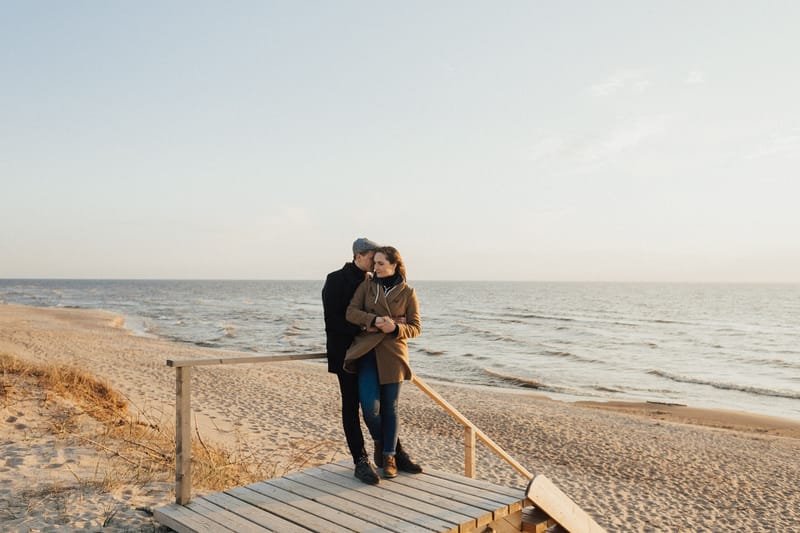
- Elopement: just the two of you, plus the two witnesses the law requires. Sometimes a handful of family.
- Micro wedding: up to about 30 guests, with most of the structure of a full wedding (ceremony, meal, speeches) in a smaller room.
- Small wedding: 30 to 60. Big enough to need a venue, small enough that every supplier's package needs adjusting.
The legal bit (it's the same)
Eloping doesn't shorten the paperwork. You still give three months' notice to a civil registrar, pay the €200 fee and get your Marriage Registration Form. Our guide to getting married in Ireland walks through it.
The part that matters for elopements is where you can legally marry:
- Outdoors, with legal effect (a cliff, a beach, a garden, a lake shore): you need a solemniser from a registered secular or religious body, most often a Humanist celebrant. They can marry you anywhere, any day.
- A civil ceremony with an HSE registrar has to take place in a registration office or an approved indoor venue, on a weekday for the most part. Many couples do the legal ceremony in a registry office and hold a personal ceremony wherever they like afterwards.
You need two witnesses over 18. If it's genuinely just the two of you, your photographer and videographer can witness, and often do. Ask them in advance.
If you're marrying on public land, a national park or a beach, check whether a permit is needed. Some sites (national parks managed by the NPWS, heritage sites) ask for notice or a permit for ceremonies and commercial photography.
Where
The classic Irish elopement is the west coast: the Cliffs of Moher and the quieter cliffs north and south of them in Clare, the Dingle and Beara peninsulas in Kerry and Cork, Connemara's beaches and lakes, Achill, Donegal's Slieve League. Inland, Glendalough and the Wicklow Mountains, and the ruins and round towers that are everywhere. Our county guides cover suppliers and logistics for Kerry, Galway, Cork and Wicklow.
For a micro wedding, the best venues are the ones designed for it: country houses that take small numbers midweek, castles for exclusive use (far more affordable with 20 guests on a Tuesday than 150 on a Saturday), restaurants with private rooms, and the many Irish pubs with a good function room upstairs. Our top venues guide notes which of the big names work at small scale.
Ask about minimum numbers. Many hotels won't open a function room for fewer than 50 or 60 guests on a Saturday. The same venue may be delighted to host 20 on a Thursday.
What it costs
There's no reliable published average for Irish elopements, but the structure is simple: you're removing the biggest cost (feeding 150 people) and keeping the per-day costs (celebrant, photographer, videographer, flowers, hair and makeup, the dress and suit). A rough shape:
- Celebrant: typically several hundred euro, more for travel to a remote spot.
- Photographer and videographer: most offer elopement or half-day packages (two to four hours of coverage) at well under the full-day price. See the photographer guide and videographer price guide for full-day figures, and ask for the elopement rate.
- The meal: a long lunch for ten in a good restaurant costs a fraction of a wedding breakfast, and you can choose the food.
- Travel and accommodation for you and your suppliers if you're going somewhere remote.
- Flowers, hair and makeup, transport: the same as a big wedding, because they're per person, not per guest.
For context on full-size budgets, see average wedding budgets in Ireland.
Photography and video at this scale
Small weddings are where photography and video change most, and where couples most often under-book.
- One photographer is plenty. A second shooter exists to cover simultaneous moments and big rooms; with ten guests there aren't any.
- Video still matters, maybe more. There are no speeches to a room, no band, no big entrance: the film is the vows, the landscape and the two of you. A short elopement film (three to five minutes) is a lovely thing. Two to four hours of coverage is usually enough.
- Audio on a clifftop is hard. Wind on a lapel mic ruins vows. Ask your videographer how they handle wind (furry windjammers, a second mic on the celebrant, a backup recorder). Our guide to recording vows and speeches explains the setup.
- A content creator can be the only video. If you want clips to share that evening rather than a film to keep, a content creator is a sensible, cheaper choice for an elopement.
- Family at home. Many videographers can livestream a ceremony from a phone or set up a simple stream for relatives abroad. Ask; mobile signal on the coast decides whether it's possible.
A timeline for an elopement day
The full-day timeline still applies in miniature, with one big difference: you're free to put the ceremony wherever the light is best.
- Morning: hair, makeup, getting ready. A photographer or videographer arriving 60 to 90 minutes before you leave is plenty.
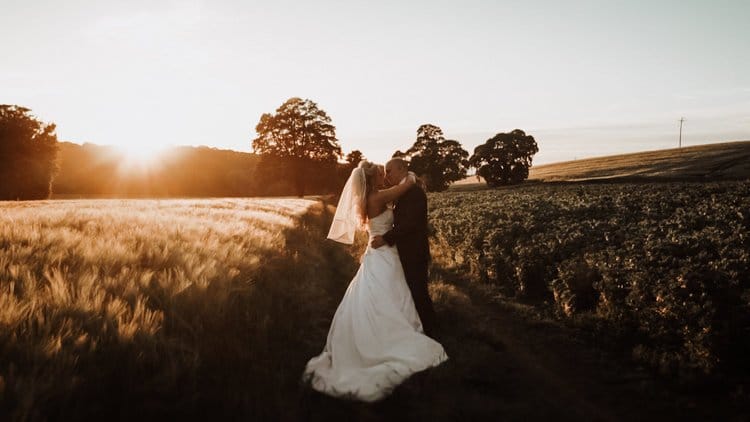
- Ceremony: mid-afternoon in winter, or an hour or two before sunset in summer if you want golden light. Give yourselves time to drive and to walk from the car; coastal spots are rarely beside the road.
- Portraits: right after the ceremony, while you're there.
- Dinner: a long table somewhere warm.
Build in a weather hour. On the west coast it's not optional; our weather plan covers what a good plan B looks like.
The party later
A lot of couples who elope throw a party afterwards, a month or a year later, where the film gets its first screening. If that's the plan, tell your videographer: a slightly longer film, with the family's messages or the celebration itself included, is an easy add while they're editing.
Where to start
- Decide the kind of ceremony you want (outdoor means a Humanist or other solemniser).
- Book the notification appointment; three months is the minimum.
- Book the celebrant and the photographer or videographer for the date, since remote spots mean travel for them too.
- Choose the place, with a plan B within 20 minutes of it.
- Book dinner.
For the questions to ask each of those suppliers, use our questions to ask every wedding supplier checklist.