How to Choose a Wedding Photographer in Ireland (2026/27 Guide)
Your photographer is the supplier you'll spend most of the day with, and the one whose work you'll look at most often for the rest of your life. Choosing one is less about finding "the best" and more about finding the person whose way of seeing a wedding matches the way you want to remember yours.
This guide covers the four styles you'll meet, what Irish photographers charge, what's actually in a package, the questions worth asking, and how to make sure your photographer and videographer help rather than hinder each other on the day.
The four styles, and how to tell them apart
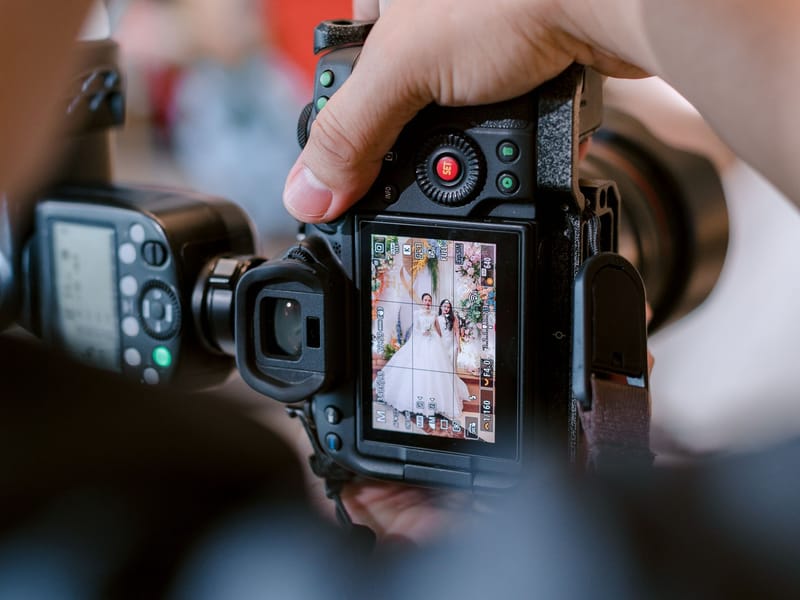
Most Irish photographers describe themselves with some mix of these words. Look at the pictures rather than the labels, but it helps to know what the labels mean.
Documentary (also called reportage or candid). The photographer follows the day as it happens and rarely poses anyone outside the family formals and a short couple session. Galleries are full of laughter mid-sentence, guests, children, the moment before the moment. This is now the most common style in Ireland. It suits couples who hate being directed and want to see the day as their guests saw it.
Editorial. Think magazine. Strong composition, deliberate light, fashion-influenced posing for the couple session, and a polished, often moody or high-contrast edit. Suits couples who love design and want a few frames that look like a cover shoot, and who don't mind being directed for twenty minutes.
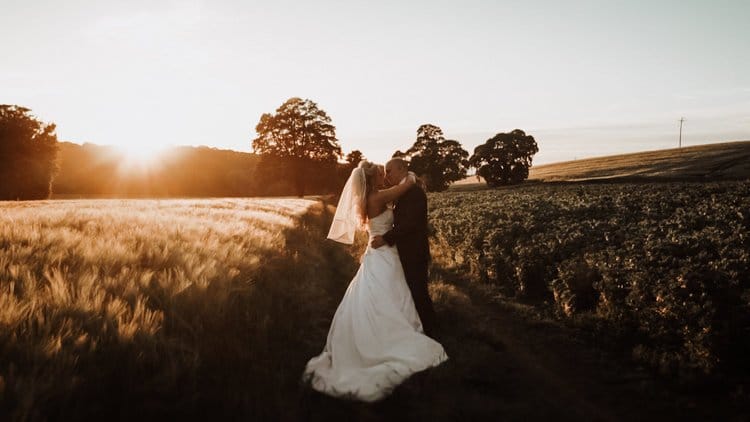
Fine art (sometimes "light and airy"). Soft, bright, pastel-leaning images, often shot or styled to look like film. Detail shots (stationery, florals, rings) feature heavily. Suits garden and country-house weddings and couples who want a romantic, timeless album rather than a punchy one.
Traditional (or classic). More posed groups, more formal portraits, everyone looking at the camera. Less fashionable, but it delivers the photographs your parents will want framed, and plenty of documentary photographers quietly include a traditional set of formals for exactly that reason.
The honest answer for most couples is a documentary photographer who handles formals efficiently and gives you a relaxed twenty-minute couple session. Ask to see how a photographer handles all three parts, not just the pretty bit.
What wedding photographers cost in Ireland
The most recent published average is €2,094, from the weddingsonline survey of 1,023 couples in January 2024. Prices have risen since. For 2026/27 bookings, the rough bands look like this:
- Newer and part-time photographers: €1,200 to €1,800. Often very good value. Shorter coverage, fewer images, and you should look harder at how they handle dark receptions and bad weather.
- Established full-time professionals: €1,800 to €2,800. Full-day coverage, a second shooter for larger weddings, 500 to 800 edited images, an online gallery and usually an album option.
- Premium and in-demand studios: €2,800 to €4,500. Two photographers as standard, a pre-wedding shoot, albums included, fast previews, and dates that book out 18 months ahead.
- Destination and luxury: €4,500 and up. Multi-day coverage, travel, and a team.
For where photography sits in the overall budget, see our average wedding budgets guide. If you're deciding between a photographer and a videographer, or trying to fit both, start with photography vs videography and the videographer price guide.
What's actually in a package
Two quotes at the same price can contain very different things. Check each of these:
- Hours of coverage. "Full day" usually means bridal prep to the first dance, roughly ten hours. Some photographers finish after the first dance, some stay for the party. Ask when they leave.
- Second photographer. Worth it for 120+ guests, two prep locations, or a big church. Ask whether the second person is a professional or a trainee.
- Number of images. 400 to 800 edited images for a full day is typical. More isn't better; a tightly edited 500 beats a baggy 1,200.
- Editing. All delivered images should be colour-corrected and consistent. Retouching (skin, stray hairs, removing an exit sign) is usually limited to a handful of key images or charged separately.
- Delivery time. Six to twelve weeks is normal in peak season. A handful of previews within a week is common and worth asking for.
- Gallery and files. An online gallery for sharing, plus high-resolution downloads. Check how long the gallery stays live.
- Prints and albums. Albums range from a few hundred euro to over a thousand depending on size and maker. If an album is included, ask how many pages and how many design revisions.
- Pre-wedding or engagement shoot. Useful if you're camera-shy; it's a rehearsal for being photographed.
- Travel and accommodation. Usually included within a radius, charged beyond it. Ask before you fall in love with a venue three hours from their base.
Questions to ask before you book
- Can we see two or three complete galleries from real weddings, including one in a dark venue in winter? Highlights on Instagram tell you very little.
- Have you shot at our venue, or one like it? If not, will you visit beforehand?
- Who will actually photograph our wedding? (Some studios send associates.)
- What happens if you're ill on the day? Do you have a named backup?
- Do you carry public liability insurance? Many venues require it.
- How do you handle family formals, and how long do you need? Ten to fifteen groupings in twenty minutes is efficient. Thirty groupings is a lost drinks reception; our wedding day timeline explains why.
- How long is the couple session, and do you direct us or leave us be?
- What's the delivery timeline, and do we get previews?
- Do we get the high-resolution files, and can we print them ourselves? (You should.)
- Do you shoot RAW, and do you back up on the day? (Dual card slots are the norm.)
- How do you work alongside a videographer? The answer tells you a lot (see below).
- What's your payment schedule and cancellation policy, and is everything in a written contract?
A printable version of these, alongside the questions for every other supplier, is in our questions to ask every wedding supplier.
Photographer and videographer: making them a team
The best wedding films and the best wedding photographs come from the same weddings: the ones where the two suppliers worked together. A few things make that happen:
- Introduce them before the day. Share each other's names and numbers. Many have worked together already.
- Agree who leads the couple session. Usually the photographer directs and the videographer films around it, then takes five minutes of their own for movement, walking and talking. Build 25 to 30 minutes in for both.
- Share one timeline. If the photographer wants golden hour at 9pm and the videographer doesn't know, you'll be pulled in two directions. Our timeline planner builds one you can send to both.
- Talk about flash. Flash is fine for video. Continuous video lights on the dance floor can affect photographs. A two-minute conversation at the venue solves it.
- Avoid two directors. If both suppliers pose you, the session takes twice as long and you'll look tense in both. Pick one lead.
If you've been told you don't need a videographer because you have a great photographer, read will I regret not getting a videographer for the honest version of that argument, and the content creator guide for the newer third option.
Red flags
- No full galleries available, only highlights.
- No contract, or a contract with no delivery date.
- Can't or won't name who'll be shooting your wedding.
- Vague about backup and insurance.
- Pressure to book before you've met or spoken.
- A portfolio where every wedding is in bright sunshine. Irish weddings aren't, and you need to see how they handle rain and dim rooms. Our weather plan covers what to ask.
Where to start
We keep a short list of wedding photographers we recommend across Ireland. For the rest of your supplier search, the county guides cover venues and local logistics, and the questions checklist keeps every conversation on track.